This is the longest answer I wrote, in the first month of writing for Seminarium Theologico-Philosophicum, commenting on Plato’s Laws, Book X, 893b–899d.
We’re about to start Aristotle’s two arguments for a Prime Mover. (First chunk to read: Physics II.1–3.) You can sign up here. Details here. There is still a one-month-free option available, but I will probably discontinue it soon. Join us!
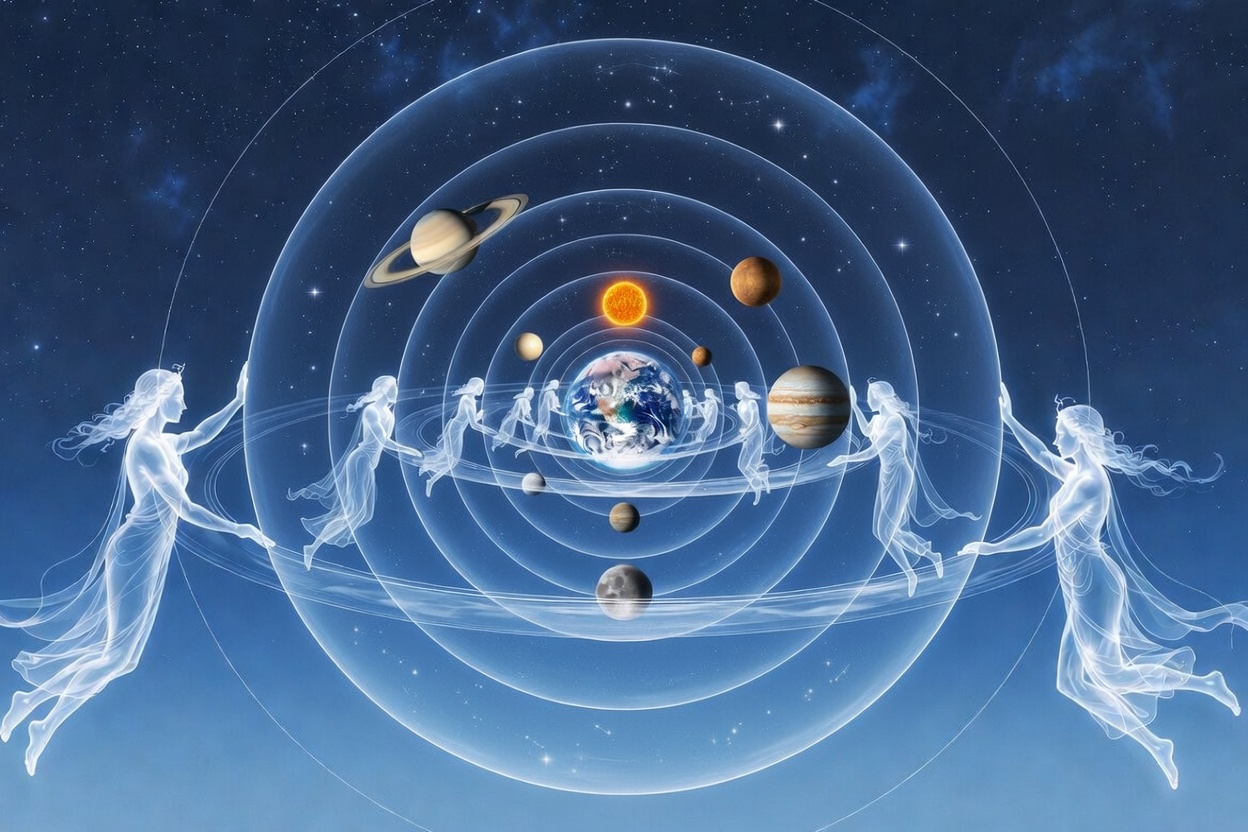
This may also be called a first mover argument. This is a very long section. While you need not get as deeply “into the weeds” as Plato does, make sure you cover the main points developed. Several sub-questions are salient: What are some types of motion Plato mentions (and why does he mention them)? Why does he hold self-motion to be the origin of other types? Why does he say, and what can be meant by saying, that self-motion is the essence of both life and soul—and what do these have to do with each other? How does Plato use these premises to support claims about the celestial bodies and, ultimately, about the gods?
Even as a Christian apologist might (indeed, should) pray to God to help his efforts, the Athenian says “we must invoke the aid of a god” as “a sort of safety rope” (892e–893a). I found that interesting. Well might he pray, as the argument he next launches into is so long and complex that it would need divine help to avoid any error.
As before, I will first represent Plato’s reasoning as a numbered argument, and then discuss each premise (and the corresponding parts of the text) separately.
- There are various kinds of rest and motion, such as revolving, gliding, increase, and decrease. (893b–e)
- Whenever anything comes to be, the starting point, receiving increase, proceeds to later changes until it admits of perception. (893e–894a)
- Either a thing is able to be changed by others, without being able to change itself (motion type 9); or it may be able to change itself as well as others (motion type 10). (894b–c)
- If a thing is not able to change itself, but can only be changed by others, it cannot be the first item in a series of changes. (894e–895a)
- Thus (from (3) and (4)), only a thing able to change itself as well as others is capable of being the first item in a series of changes (and of producing change in the series). (894e–895a)
- Equivalently, only a thing that moves itself can be the first in a series of movements (which begins from a state of total stillness). (895a–b)
- Whatever is first in a series of movements is necessarily the oldest and most powerful change of all. (895b)
- Hence (from (6) and (7)), only a thing that moves itself can be the oldest and most powerful change (in a series of all movements). (895b)
- If a thing (being made of earth or water, or fiery, and whether separate or mixed) is capable of moving itself, it is alive. (895c)
- Things are living if, and only if, there is soul [psychē] present in them. (895c)
- The name and the account of a thing refer to the same being (ousia). (895d–e)
- Hence, from (9)–(11), we may give a similar account of ‘soul’: There is a soul present in a thing if, and only if, it is a thing capable of moving itself. (895e)
- Therefore, from (8) and (12), soul (being a self-moved mover) is the cause of all change and movement in all things, i.e., it is “the oldest of all things” (cf. (7)). (896a)
- From (12), we infer that (soulless) body can never move itself; if it moves, it is moved by something else. (896b)
- Thus, from (13) and (14), soul came to be (originated) prior to body, i.e., soul is “older than” body. (896b–c)
- If soul is older than body, then what belongs to (is distinctly attributed to) the soul would be older than what belongs to (is distinctly attributed to) the body. (Argued at 892a–c; see this discussion.)
- Thus (from (15) and (16)), temperaments, beliefs, and memories, which belong to the soul, would have come prior to length, breadth, and strength, and everything else that belongs to body. (896c–d)
- And therefore, since all attributes belong either to the soul or the body, and since causes always precede effects, we must say that the soul is the cause of all things, whether good or bad, fine or shameful, just or unjust. (896d)
- Insofar as soul manages and resides in all things that move or change, it therefore manages the universe (heaven, the heavens). (896d–e)
- If the path and movement of the heavens has the same nature as the movement, revolution, and rational calculations of understanding, then the best soul supervises the entire cosmos and leads it along that sort of path. (897c)
- The heavens move in circular paths, revolving in one place like a sphere turned on a lathe. (Treated as obvious by Plato; not explicitly stated as a premise, but cf. 893c–d and 897d–898a.)
- When understanding is directed to an object of rational calculation (such as the heavenly spheres), “the circle of the Same runs well.” (Assumed by and supplied for Plato.)
- Since (21) and (22) are the case, circular motion, like things turned on a lathe, has the greatest possible “kinship and likeness” to the “revolution of understanding.” (898a)
- If the circular motion of the heavens has the greatest possible “kinship and likeness” to the “revolution of understanding,” the path and movement of the heavens has the same nature as the movement, revolution, and rational calculations of understanding. (Supplied for Plato.)
- Thus (from (23) and (24)), the path and movement of the heavens does have the same nature as the movement, revolution, and rational calculations of understanding. (Supplied for Plato.)
- Therefore (from (20) and (25)), the best soul supervises the entire cosmos and leads it along that sort of path. (898c, conclusion not explicitly drawn by Plato.)
- Since, according to (26), (the best) soul “leads around” the entire cosmos, it leads the sun around as well. (898d)
- If the soul does lead the sun around, either (a) it resides in it, as our soul does in our bodies; or (b) it leads it from somewhere outside, equipped with a body to push the body of the sun; or (c) it is stripped of body but “provides guidance” through “some other exceedingly amazing powers”. (898e–899a)
- Regardless of which of (a)–(c) is correct, such a guiding soul must be regarded as a god. (899a)
- The observations made in (26)–(28) concern an arbitrary celestial body, so, the same things must be said of every other celestial body. (899b)
- Therefore, we may draw the conclusion in (29) of all celestial bodies; hence, “all things are full of gods.” (899b)
We will take each step of the argument in order. This will take quite a while, but so much is introduced in this discussion that it should be time well spent.
(1) There are various kinds of rest and motion, such as revolving, gliding, increase, and decrease. (893b–e) The Athenian begins by subjecting himself to a sort of Socratic line of questioning; but not quite, because all that is going on is a list of a number of kinds of motion (forms of κίνησις, kinēsis; where we get “kinetic” from):
- Some things are in movement and some are at rest. (893b–c)
- For some moving objects, there is some region in which the stationary points are stationary and some region in which they are moving. (893c)
- Moreover, some things revolve about a fixed point, as it were in nested, concentric circles; when this is the case, the things in the outer circles move faster than the things in the inner circles. (893c)
- Some things so move that all their parts move together (as in gliding). (893d–e)
- Some things increase or decrease when combined. (893e)
Later, it becomes clear that Plato takes himself to have enumerated eight types of kinēsis (so far). I will not bother to try to work out what, precisely, the eight are and how to characterize them; the language is obscure in places, and the details do not seem to matter.
(2) Whenever anything comes to be, the starting point, receiving increase, proceeds to later changes until it admits of perception. (893e–894a) The topic here has passed from general types of motion to what we might call “origination.” Here, Plato apparently takes himself to be characterizing not all motion particularly, nor all change, but the process of origination or “coming-to-be” (I will use these as synonyms). While the Athenian usually characterizes this in terms of “movement,” he includes growth (αὐξάνεται, auxanetai, increase; also includes grow and strengthen) as one type. As it happens, kinēsis itself already meant, in Greek, something broader than what we understand by “movement” and, in that broader sense, may refer to other kinds of physical change besides change of place and position. In his classification, then, what I will call origination (coming-to-be, “creation” with or without a creator) falls out as one of the types of motion.
After describing the process of origination in very broad generalities, the Athenian adds what is intended to be a gloss: “It is by changing [μεταβάλλον, metaballon, participial form of metaballein, turn about, change] and moving [μετακινούμενον, metakinoumenon, shifting, removing; a form of kinēsis] from one place to another in this way that everything comes to be.” (894a) On first glance it might look as if Plato is saying that there is some special process or theory according to which origination occurs. But I think he is saying something much simpler and broader, namely: Origination is a variety of kinēsis, i.e., may be understood as change of states, or of “motion” in a broad sense; but the fact that he also uses metaballon here makes it clear that he intends this as an analysis not just of motion but of change generally.
(3′) Either a thing moves (kinēsis) and changes (metabolē) others (through aggregations and disaggregations, increases and decreases, origination and destruction) and is changed by others, but it never changes itself; or it may be able to move itself and others. Note that the latter wording is closer to what Plato has in the text, and is not what I have in my reconstruction. Let me explain this.
This passage at 894b–c is perhaps the most logically convoluted and confusing set of propositions we have yet encountered in Plato. Plato is attempting to analyze what he (initially) describes as the ninth and tenth kinds of motion. But there are multiple variables at work here: motion versus change; capability of motion versus actual motion; capability of changing others (active motion/change) or not, and of being changed by others (passive motion/change) or not; and capability of self-movement or self-change, or not. By combining different configurations of these variables, the Athenian presents two different pairs of analyses:
- A thing capable of moving others but incapable of self-motion (motion type 9) versus a thing capable of moving others and self-motion (motion type 10). (894b)
- A thing that moves and is moved by another (motion type 9) versus a thing that moves itself and others (motion type 10). (894c)
What I have as (3′) above is closer to (b), not (a). But let us make some reasonable assumptions and see if we cannot make more straightforward sense of this confusion. First, Plato is clearly meaning to draw a contrast, and we should characterize motion types 9 and 10 in ways that are consistent with each other except in the relevant differences. Second, whatever the formulation, Plato wishes to infer from the nature of motion type 10 that it is “the change and movement of all the things that are” (894c). Now, we are not merely speaking of “motion” at least in modern English categories, but of change; we are certainly speaking of capacity for change, not just routine or normal change; and the really essential difference is clearly that between things that can change/move themselves and things that can be changed/moved only by others. So the simplified formulation of (3′), which actually combines elements of (a) and (b), would look something like this:
(3) Either a thing is able to be changed by others, without being able to change itself (motion type 9); or it may be able to change itself as well as others (motion type 10). (894b–c)
Now that we have explained this formulation, let us briefly discuss the work that it does in the argument. The contrast between motion of types 9 and 10 is a disjunction (as the logicians say: an either-or statement). This is essential to the argument. I might put it this way: Either a thing is only passive, in a chain of changes, or it can contribute to some activity of its own, so that it is active. Like a cat that plays with a toy mouse, the mouse can move across the floor, and even hit and move other toy mice, but only when hit by the cat’s paw; without being moved by the cat, the toy mouse sits motionless; the cat is the only “source of motion.” The cat’s kind of motion is fundamentally different from the toy mouse’s.
(4) If a thing is not able to change itself, but can only be changed by others, it cannot be the first item in a series of changes. (894e–895a) This premise is meant to be obvious. Here, we may understand Plato’s point with a thought experiment. Imagine “one thing producing change in another thing,” such as the cat’s paw sending a toy mouse across the floor. But we may ask also, of the cat, whether it was always able to act on the world in this way; clearly not. There was a time when it had to be acted upon, before it could become an actor. I mean it had to be born, of course: “brought into being,” originated. The cat cannot, as it were, get itself going and later hit the toy mouse across the floor. But this is true of almost everything in the world. So now let us think of all the possible series of change in the world. Could anything like the cat, which cannot get itself going with respect to its lifespan (and thus, with respect to its first moment, is capable of motion type 9 but not type 10), be the first in any complete series? Clearly not. It is a self-mover, but it must be originated. What then of the gods: Must they be originated? We will return to this question at the end.
If, however, we think of the first state of the universe, as it is conceived of by those who believe its initial condition was a “brute fact,” they certainly believe that it is a condition that could not bring itself into being; rather, it is “just there,” which is what “brute fact” means. So, such people might call (4) into question.
Next, Plato draws the important intermediate conclusion:
(5) Thus (from (3) and (4)), only a thing able to change itself as well as others is capable of being the first item in a series of changes (and of producing change in the series). (894e–895a) Call the first change in a series “the original change.” Now, since the original change either comes from within or from without (which is what (3) says, to simplify), if it does not come from without, it must come from within. This is to say that a thing must be “self-changing” or “self-moving” if it is to originate a series of changes. Perhaps a simpler way to put it, if you have any experience with regress arguments, is that the “regress” must start somewhere, and whatever it starts with must be self-moving. This is not the ultimate conclusion—we have not even begun to speak about the universe as a whole—but does a significant amount of the work in the overall argument.
The next section of the argument begins to sound more cosmological, and it happens quickly, as it is mostly just drawing conclusions.
(6) Equivalently, only a thing that moves itself can be the first in a series of movements (which begins from a state of total stillness). (895a–b) This is not precisely what Plato says, but it is close. He says, “If all things, coming to be together, were somehow to stand still, as most of these thinkers [the godless “wise men,” the sophoi] dare to say, which of the movements we mentioned would necessarily be the first of them to come to be? Surely, it’s the one that moves itself. For it would never be changed by another prior one [movement], since there is [by hypothesis] no prior change among them.” (895a–b) This is presented as a little inference, but it is more or less a restatement of (5), applied to a situation, commonly imagined by Plato’s opponents, in which the cosmos begins with no motion at all.2
(7) Whatever is first in a series of movements is necessarily the oldest and most powerful change of all. (895b) This is simply a semantic inference, drawing equivalences between “first” and “oldest” and between “that which is causally responsible for a series of changes” and “most powerful.”
(8) Hence (from (6) and (7)), only a thing that moves itself can be the oldest and most powerful change (in a series of all movements). (895b) An application of modus ponens.
(9) If a thing (being made of earth or water, or fiery, and whether separate or mixed) is capable of moving itself, it is alive. (895c) On first glance, this looks obviously wrong. What about self-moving mechanisms (automata), which were already in existence in ancient Greece? They appear to have self-motion, but they are not alive. Handling this objection would require further distinctions; at some point, as I vaguely recall, Plato and/or Aristotle speak of automata having no principle of motion in themselves, which is what the soul is. So this is another place where a skeptic might push back. Indeed, one might wonder if Plato is not ultimately committed to something like “natural design” in a fuller account; and here, again, skeptics would push back by saying, “Perhaps there are self-moving items in the universe that do not take their motion from any other thing; perhaps the universe itself is such a thing.”3
(10) Things are living if, and only if, there is soul [psychē] present in them. (895c) Here we see the very close connection in Greek between ψυχή (psychē, mind, spirit, soul; life is sometimes the best translation) and ζωή (zōē, life; or, as here, ζῆν, zēn, infinitive verb form: to live). The former suggests the idea of breath, as ψύχω (psychō) means blow or breathe. Interestingly, the same close connection among the words for soul, life, and breath is found in Hebrew נֶפֶשׁ (nephesh, which can be translated life, soul, and breath). Plato makes the point quickly because, being an analytic truth (a truth according to definition or meanings of words), it is not particularly controversial; it was built into Greek thought that everything that is alive has ‘soul’ (psychē), in virtue of which it is alive. Whether we moderns, who make no similar connection either in English or in our science, can take this seriously, I leave to you to analyze.
(11) The name and the account of a thing refer to the same being (ousia). (895d–e) Plato spends half a page discussing the connection between logos (here meaning account, definition) and onoma (name). The premise does work in the argument and is interesting for philosophers of language, but the interest here is the fact that the onoma and the logos of a being are held to be perfectly co-extensive, i.e., they refer to the same thing or, if you prefer, you can substitute a word by its definition and vice-versa. Plato crucially depends on this in (13); let us wait until we have presented that inference before we raise an objection to (11).
(12) Hence, from (9)–(11), we may give a similar account of ‘soul’: There is a soul present in a thing if, and only if, it is a thing capable of moving itself. (895e) This sounds strange to us, of course, because we think of the soul as a thing that probably only human beings have, capable of being inhabited and elevated by God. Such ideas trade on a different concept of soul, however. On the Greek conception, even trees have psychē; but this is not to say that they breathe,4 but only that they have a “life force” or “living principle,” whatever precisely this is. The claim in (12) would be plausible to Plato’s Greek readers because this force or principle would be responsible for even plants and fungi moving (in the sense of growing, sending shoots, etc.).
(13) Therefore, from (8) and (12), soul (being a self-moved mover) is the cause of all change and movement in all things, i.e., it is “the oldest of all things” (cf. (7)). (896a) This is not as much of a leap as it might at first appear. From (8), we know that only a thing that moves itself—a self-moved mover—could be the first or oldest in a given (self-contained) series of movements. This was the result of a fairly complex bit of reasoning. But we just showed, with (12), that whatever is capable of moving itself (or being a self-moved mover) by definition has a soul.
But we might raise an objection. One might maintain that Plato never sufficiently established that only soul could be a self-mover. Perhaps there are unconceived-of beings, perhaps outside of our experience, that are self-moving, but which are not alive. Being self-moving could be an element of the definition of ‘life’ without exhausting it. If there turn out to be beings that can move themselves but which are not in any meaningful sense alive, that would refute the argument. Now we see the relevance of (10) and (11). According to (10), the logos of life is to be self-moving; so, if something is alive, it can move itself. But if that is the correct logos, then according to (11), we can say that the entailment works in the opposite direction: If something can move itself, then it is alive. Since ‘life’ and ‘soul’ are essentially synonyms, we can also say that it has a soul. This, then, is logically equivalent to the claim that only soul could be a self-mover. The objection, then, can be made against (11): The objector must deny that self-motion exhausts the definition of life (i.e., there’s more to it).
(14) From (12), we infer that (soulless) body can never move itself; if it moves, it is moved by something else. (896b) While Plato does not present this as an inference, if he is not making the inference from (12) that we attribute to him here, then he would simply be begging the question against his opponents. That it is an inference is clear: The whole point of going on about how onoma (name) and logos (account) apply to exactly the same things is to allow him to argue that, if ‘life’ means ‘capable of self-movement’, then if something is not capable of self-movement, then it is not alive. Plato is not simply claiming that “inanimate”5 objects do not move about on their own; he is, rather, inferring that they must be moved by forces external to themselves, since they are not alive.
The godless sophoi would probably wish to respond to this point in any event. It is the physis of fire to rise, they might reply; it is the physis of earth to fall or settle. These, we might say on behalf of sophoi, would be proto-scientific laws. Their response to Plato, then, would be that if matter is found to change and move according to certain laws, then it is indeed self-moving. Plato will respond that those very laws demand an explanation, and indeed he has one, as we will see. Thus, the fact that “inanimate” objects move in accordance with laws does not mean that their principle of movement comes from within themselves. Indeed, Plato says in (14), it manifestly does not. And if not, where does it come from?
(15) Thus, from (13) and (14), soul came to be (was originated) prior to body, i.e., soul is “older than” body. (896b–c) This is indeed how the Athenian puts it: “soul came to be prior to body”. This might seem to be a strange claim for Plato to make, however, if he is arguing that the divine soul is before any body, having created the universe. So, you might ask, “Isn’t the point that the divine soul did not “come to be” at all? That is, after all, what Plato says of the Demiurge in the Timaeus, who is an eternal Being.”
We may make several instructive points in reply. (a) In the present argument, he has not drawn this more ambitious conclusion, because he wants further premises on the table so as to be able to characterize “the oldest of all things.” While the latter is a cosmological topic, he has been speaking about it in very abstract generalities. (b) His point is simply that soul as such, or some soul, must be prior to all bodies, insofar as body is never self-moving, while the soul is essentially self-moving. Finally, (c) he has said nothing to imply that all souls are uncreated, i.e., for all he has said so far, most souls do indeed come to be, just as most bodies do.
(16) If soul is older than body, then what belongs to (is distinctly attributed to) the soul would be older than what belongs to (is distinctly attributed to) the body. (Argued at 892a–c; see this discussion.) This is simply borrowed from an earlier part of the discussion. His use of an earlier premise at this point illustrates how carefully constructed his discussion is.
(17) Thus (from (15) and (16)), temperaments, beliefs, and memories, which belong to the soul, would have come prior to length, breadth, and strength, and everything else that belongs to body. (896c–d) This is merely an inference from and illustration of the foregoing, all in service of the next point.
(18) And therefore, since all attributes belong either to the soul or the body, and since causes always precede effects, we must say that the soul is the cause of all things, whether good or bad, fine or shameful, just or unjust. (896d) Here, I have supplied a couple of reasonable premises Plato has quietly smuggled into the argument. In order to argue that the soul is “cause of all things” (τῶν πάντων, a form of τὰ πάντα, ta panta, literally “the all”: all things), he must assume that all attributes belong either to soul or body; there is no further category. He is also assuming that causes always precede effects, which, notwithstanding theories of “backwards causation,” is often regarded as an analytic truth about causality.
If there is anything odd about (18), to my mind it is that he has simply put (17) in terms of attributes such as beliefs, length, good, and unjust. He may have done so in order to be able to say, explicitly and with full warrant, not only that soul is the ultimate cause of other objects but of all facts about other objects.
It is also worth pointing out that Plato here seems to be rejecting a basic premise of Gnosticism,6 namely, that soul (or spirit, anyway, if that is different) is by its very nature good. Plato rightly agrees with the Bible (and common sense) here: There are wicked souls indeed, which are responsible for much evil in the world.
(19) Insofar as soul manages and resides in all things that move or change, it therefore manages the universe (heaven, the heavens). (896d–e) This is not the final conclusion, though Reeve’s word choice (“the universe”) might, confusingly, lead you to think so. The Greek is τὸν οὐρανὸν, a form of ouranos, which can mean “the universe,” i.e., something that includes the earth; but usually, and certainly here, it means ‘heaven’. Plato’s point is to apply the general claim made in (18) to the heavens, which were often thought to be the dwelling place of the gods.
“Manages and resides” (Reeve) can also be translated “controls and indwells” (Bury) or “orders and inhabits” (Jowett). The Greek is διοικοῦσαν καὶ ἐνοικοῦσαν, dioikousan kai enoikousan, meaning literally “keep house” and “dwell in.” This word choice uses the metaphor of residence or dwelling. I think this suggests that Plato is not intending to introduce unargued-for levels of heavenly control, but only that the things the Athenian had been saying about (presumably) human souls and bodies actually apply, ceteris paribus, to heavenly things as well. All the business about the soul being a self-moved mover is just as “at home” in the heavens as on earth.
From approximately 896d to 897b, Plato appears to outstrip his premises, making plausible-sounding, but unsupported, assertions. Yet this is not just a digression; he is preparing the reader for the next, concluding section of the argument. For example, he merely asserts that soul uses understanding (considered “rightly a god to gods”) as a helper to guide all things toward what is correct and happy, while lack of understanding produces the opposite (897a–b). I would be inclined to make this a step in the argument, but it is not supported, and he will soon be making an explicit argument for something similar. In any event, by now we should be able to distinguish when Plato is speaking loosely and poetically and when he is speaking more strictly. This is, we might say on his behalf, a loose and poetic peroration, not meant to be so closely argued.
He asserts that, since the same soul could not be the cause of both good and evil, there must be at least two souls that “manage the universe.” (896e) This is interesting, but puzzling. Does Plato mean to say, like the Zoroastrians, that there is a good god as well as an evil god in the universe? His fellow Greeks, if they were to follow their myths closely enough, might maintain that the gods each have good and bad in them, which is something that Hindus say explicitly; when Plato is being “pious,” he seems to maintain that the gods are purely good. Moreover, in the rest of the argument, he actually maintains that any god responsible for the movement of a celestial sphere must have “the best soul.” So it is not clear to me what work this statement is doing in the text. Indeed, I suspect that this statement cannot easily be reconciled with what he says in the rest of the discussion; at least, I do not immediately see how Plato can avoid the accusation of self-contradiction.
What Plato says next is not so much a logically distinguishable part of the argument so much as an elaboration of what he has already said. “So soul leads all things in the heavens, earth, and sea by its own movements,” he begins, listing such soul “movements” as wishing, supervising, and deliberating (896e). These, he says, give rise to “the secondary movements of bodies” causing “increase and decrease, disaggregation and aggregation,” and all physical properties such as heat, hardness, and whiteness (897a). So far, I think, he has simply applied some general principles already argued-for.
It would be useful for us, as an exercise, to list the things that Plato assumes without argument:
- When it comes to heavenly or divine souls, a soul that does good could not also do evil. (As we observed at (18) above, Plato knows that human beings have souls capable of both good and evil. Why not divine ones as well?)
- There is some robust sense in which, by its effects, soul “leads all things in the heavens, earth, and sea.” (It is one thing to say that soul originates all change or movement, which he has logically supported; it is quite another to say that soul “leads” or “manages” all such effects, which is what Plato, in this peroration, is implying. This almost sounds like a doctrine of divine sovereignty.)
- Understanding (nous) leads to what is “correct and happy,” and the lack thereof to the opposite. (Suffice to say that there is such a thing as dumb luck; would this contravene what Plato says here?)
- The soul that is in control of the heavens and their entire revolution is either full of wisdom and virtue, or possesses neither. (897b) (On first glance, this looks like a false dilemma; but he is about to develop this thought more rigorously.)
The fact that Plato makes such broad claims with relatively little argumentation or explanation is why I say he is speaking loosely and poetically.
We can represent the rest of the argument rigorously, but only by supplying implicit assumptions Plato (arguably) makes.
(20) If the path and movement of the heavens has the same nature as the movement, revolution, and rational calculations of understanding, then the best soul supervises the entire cosmos and leads it along that sort of path. (897c) In this rather obscure premise, Plato refers to the “movement” and “revolution” of the understanding. The “movement” of our understanding? What could that mean? We will put off explaining this until we discuss (22). For now, we can observe that the present proposition represents a strategy statement, giving shape to the rest of the argument. Plato now sets out to show that the heavens (ouranos) and understanding (nous)7 have the same nature (physis). What this proposition asserts, then, is that if they do indeed have the same nature, then “the best soul supervises the entire cosmos and leads it along that sort of path.” (897c) What sort of path? As we will see—a circular one!
Plato is suggesting that, perhaps, we can make observations of the movement of the celestial spheres—the orderly, mathematically precise orbits of the sun, moon, planets, and stars—and thereby show that they exhibit the “movement, revolution, and rational calculations” of a kind that is (in some mysterious way) exhibited by our own souls. That, he asserts, would be enough for us to conclude that “the best soul supervises the entire cosmos.” The suggestion seems to be this: How else could the movements of the heavens and our minds be so similar, if the heavenly movements were not guided by a divine mind?
The common observation that the heavens appear to be wonderfully ordered is closely associated with what was (much later) called the Argument from Design. So, Plato’s argument seems to step into that territory at this point. This is fine, of course. The discussion from roughly 896d to 899d does seem to add a “design” conclusion to the more purely “cosmological” argument found at (1) through (19) in our reconstruction. To be clear, Plato does not begin from a premise such as, “the universe is like an orderly cosmic machine,” and conclude, “therefore, there is a cosmic machine designer.” He proposes, rather, to make a similar inference, in effect from “the movements of the celestial spheres are similar to the ‘movements’ of our minds” to “the cosmos is designed by the best mind.”
(21) The heavens move in circular paths, revolving in one place like a sphere turned on a lathe. Plato never, as far as I can tell, states this explicitly, but he needs it for his argument, so in my reconstruction I am supplying it for him. Plato surely would have treated it as obvious, considering observations made by not just astronomers but practically everybody who has looked up at the night sky often enough. He does speak of concentric circles at 893c–d, and by this he almost certainly meant to refer to the celestial spheres. Then, at 898a, he speaks of a particular type of movement that “always in one place by necessity moves around some center, since it is an imitation of things turned on a lathe.”
The theory of celestial spheres has long ago gone in the dustbin of history, and we now know that the orbits of the planets are not perfect circles but elliptical. We can only speculate what Plato might say if he learned this. You might think that the reasoning could be patched, easily retrofitted with an argument like that of Newton in the General Scholium in the Principia (which we will be reading later). It could, but then it certainly would be a quite different argument from Plato’s, as we will see.
(22) When understanding is directed to an object of rational calculation (such as the heavenly spheres), “the circle of the Same runs well.” This again is (I think) assumed by and supplied for Plato, combining what he says in the Laws and the Timaeus. I am a little chary about attributing this to him, but I do not see how he can get the conclusion without it. It is perhaps understandable that he would skip over it, too, because this would be the most obscure and weakest part of the entire argument, which caused me to detour an hour or two trying and trying again to understand what he meant. You might think that Plato means such understanding is “circular” in the more commonsensical sense that geometry and astronomy are capable of rigorously describing and precisely modeling such circular motion. I am fairly confident, however, that this is not what Plato means. A footnote by Reeve pointed me to the Timaeus, and in retrospect, the origin of (22) in Plato’s argument is clear enough (though still very weird).
I will not discuss this too much. Suffice to say that Plato is working with what appears to be a strange, esoteric psychological theory: In some way, the mind “moves,” and Plato calls its motion “circular.” A part of the Timaeus assigned but undiscussed by our questions actually addresses this. You might recall (at Timaeus 36d–37c; see this page and this) that Plato says the soul, when created by the Demiurge, is compounded from Sameness (thus “the circle of the Same”), Difference, and Being. It seems that Soul “revolves back upon herself” (Bury), whatever exactly that means, and as “she” revolves, she encounters various things. If she identifies the things correctly, she must have been “spinning truly.” (Tim. 37c) Thus, the perfect circular motion of the mind is closely associated with reason and truth.
(23) Since (21) and (22) are the case, circular motion, like things turned on a lathe, has “the greatest possible kinship and likeness to the revolution of understanding.” (898a) This is more or less what Plato says at 898a: “Now, of these two movements, the one moving always in one place by necessity moves around some center, since it is an imitation of things turned on a lathe, and has, in every way, the greatest possible kinship and likeness to the revolution of understanding (nous).” While Plato does not present this as an inference, I think we may reasonably ascribe an implicit inference to him, particularly because the argument logically rests on something like (21) and (22), and those premises together explain why he makes the claim expressed by (23). We cannot really evaluate (or arguably even understand) what is being claimed here, because we do not understand (22). But in generalities, the idea is that the motion of the spheres is in some remarkable way similar to that of the mind: By comparing (21) and (22), we see that both “motions” are circular, and such circularity is so striking that Plato calls the analogy “the greatest possible kinship and likeness.” This is neither explained nor further supported, as far as I can tell. This intermediate conclusion becomes an important premise in the argument that “the best soul supervises the entire cosmos” (see (26) below).
(24) If the circular motion of the heavens has “the greatest possible kinship and likeness to the revolution of understanding,” then the path and movement of the heavens has the same nature as the movement, revolution, and rational calculations of understanding. I have supplied this for Plato. This simply connects the kinship language at 898a, from (23) to the formulation at 897c, i.e., the antecedent of (20). I leave it up to you to decide whether (24) is indeed a tautology, as Plato seems to assume.
(25) Thus (from (23) and (24)), the path and movement of the heavens does have the same nature as the movement, revolution, and rational calculations of understanding. Also supplied for Plato. Given (24) as a bridge, this simply restates the crucial premise (23) in a way needed to draw the ultimate conclusion.
(26) Therefore (from (20) and (25)), the best soul supervises the entire cosmos and leads it along that sort of path. (898c) Confusingly, this conclusion is not explicitly drawn by Plato. What he says is, “since soul is what we find leading everything around, it must be said that the revolution of the heavens is of necessity led around while being supervised and ordered by the best soul or by the opposite sort.” (898c) The problem is his addition “or by the opposite sort.” Here he seems to be unnecessarily cautious, as he has already done as much logical work as he will ever do to eliminate the other option. Indeed, this is Cleinias’ reaction (Bury translation): “judging by what has now been said, it is actually impious to make any other assertion than that these things are driven round by one or more souls endowed with all goodness.” (898c) You might say that he has a few more supportive points on the next page, about the sun and other celestial bodies, but, as we will see, these do no significant new logical work. I suppose that he is simply postponing the grand finale until he has said everything he wants to say on the subject.
(27) Since, according to (26), (the best) soul “leads around” the entire cosmos, it leads the sun around as well. (898d) This might look like a straightforward example of what the logicians call “universal instantiation”: If you make a claim about all things, you can make that claim about any arbitrary thing. But there is an interpretive puzzle for Plato lurking here, depending on what kind of claim (26) is.
On first glance, it looks like (26) concerns the universe taken as a whole. The argument is made based on observations not of absolutely everything that exists, but rather of the heavens (ouranos), and these, up to this point, Plato treated as a single, albeit incomprehensibly vast, object. In other words, perhaps we want to say that the observations about the celestial spheres were taken generally and in the aggregate, not specifically through examples, and the conclusion is put this way: “the revolution of the heavens is of necessity led around while being supervised and ordered by the best soul” (898c). “The best soul” accurately translates τὴν ἀρίστην ψυχὴν, singular accusative: single in number. The way Plato sets up the argument, he seems to have argued that there is just one god who guides the whole cosmic system.
But if so, there is a problem for (27). Namely, he has committed an elementary logical blunder, the fallacy of division: just because something is true of a whole, it does not follow that it is true of its parts.8
For this reason, and because he does after all immediately turn around and say that there are multiple gods, we should probably try to tell a story according to which the things said about the celestial spheres were not about all of them taken in the aggregate, but rather about celestial spheres individually, or more precisely, about any arbitrary celestial sphere. Thus the conclusion in (26) concerns not the universe taken as a whole; rather, it concerns a general category, the celestial spheres, saying of each of them that soul, i.e., one or more souls, supervises and orders them. And then, indeed, (27) seems to follow from (26) by universal instantiation.
(28) If the soul does lead the sun around, either (a) it resides in it, as our soul does in our bodies; or (b) it leads it from somewhere outside, equipped with a body to push the body of the sun; or (c) it is stripped of body but “provides guidance” through “some other exceedingly amazing powers”. (898e–899a) This is a bit of speculative theology on Plato’s part. He does not claim to know how the guiding souls of the celestial spheres have their being. Do they reside in objects? Do they have some other physical form through which they act? Or are they purely spiritual, acting by some “amazing powers”? It does not matter: The desired conclusion follows in any case:
(29) Regardless of which of (a)–(c) is correct, such a guiding soul must be regarded as a god. (899a) The reasoning is not given, but it seems straightforward: If something is a soul that is perfectly regular, aristē (best) either rationally or morally (or both), and is powerful enough to be responsible for “supervising” and “ordering” the movement of bodies such as the sun, such a thing would deserve to be called a god.
(30) The observations made in (26)–(28) concern an arbitrary celestial body, so the same things must be said of every other celestial body. (899b) What remains, then, is a purely logical move. Plato was speaking about an “arbitrarily chosen instance” of a celestial body and its god. What he says about the sun applies to others: “Concerning all the stars, then, and the moon, and concerning the years, months, and all the seasons, what other account will we state than this same one” (899b). What follows is what logicians call a “universal generalization”:
(31) Therefore, we may draw the conclusion in (29) of all celestial bodies; hence, “all things are full of gods.” (899b) The bit in quotation marks here is probably a quotation from Thales. As Aristotle said in On the Soul (411a), “Certain thinkers say that soul is intermingled in the whole universe, and it is perhaps for that reason that Thales came to the opinion that all things are full of gods.”9 This is a famous line. Plato probably does not mean it quite literally, but only poetically or loosely. All that his argument commits him, anyway, to is that each of the celestial bodies has an associated god deserving of worship, a view called astrolatry that was practically universal in the ancient world (the Christians and Jews being noteworthy exceptions). He is probably not meaning to say that every object, period, has a god attached (a view called animism).
One legitimate question for Plato is just how many gods there are. One for each star, he seems to imply, so sextillions. But one also has to wonder whether he would not also be committed to gods for lesser entities—rooted in the necessity to explain the observed order in the universe. His argument assumes that the celestial objects are self-moved, but that was just speculative on his part, and it turns out that they are not.
I wonder what Plato would make of discoveries in modern astronomy. Having learned that the planets are merely very large physical bodies, that the sun is an unremarkable star among sextillions of others, that the earth is not the center of the universe, would Plato lose his belief in the gods? That is essentially what happened to many in the Enlightenment. Or would he revise his argument to generalize, arriving at something closer to Aristotle’s argument in the Physics? Then his (revised and improved) theology might survive the onslaught of science.
I should hope that Plato would abandon everything after (19) above. Discoveries in modern astronomy would warrant that. But the rest of the argument does not depend on it. I can imagine Plato “going back to the drawing board” and asking: “So if the planets and stars are not associated with individual gods, what did get them started?” This is a question that we can pose about (27), when Plato introduces the idea of a single god that explains the sun’s motion: If the sun is not self-moving, then what started it?
Perhaps he would say, “The Demiurge,” retrenching to the system of the Timaeus. As we wind up our study of Plato’s theology, let us spend some time comparing these two.
In commenting on (4) above, we discussed this idea that, at one level, a cat is a self-mover, while at another, it obviously is not (it must be born). It is a little puzzling to me that Plato did not add that the sun, moon, planets, and stars might be in need of further explanation. Perhaps he was restrained by his conventionality, perhaps by space considerations. Each celestial sphere has an attached god, and his explanation stops there. Reflect on the fact that the Demiurge makes no appearance in Laws X. If he did, the book might have been substantially longer. In the Timaeus, Plato does find it necessary to explain the “created gods” which manage the spheres, and that took many pages.
But if he were to import that theory to the Laws, how could the present argument from self-motion get off the ground? In the Timaeus, the corresponding gods are not self-moving. Moreover, in the earlier writing, Plato found it necessary to suppose that everything is downstream of a Being that exists in eternity and thus needs no creator; that, at least, would be a metaphysical account of why the Demiurge was posited as self-moving and the creative gods were not, insofar as they were created.
What explains the apparent differences? Did Plato change his mind? Maybe he abandoned the very idea of a Demiurge as unnecessary—even as impious, since it subordinates the traditional deities to an unheard-of innovation, which points vaguely in an entirely different theological direction (monotheism!). That is one explanation, but not the only one. Perhaps he was more skeptical than we give him credit for; maybe, in both places, he was merely exploring ideas without wishing to commit himself. Or perhaps in the Laws, he sought only to give another “likely story” that would lay atheism to rest. After all, Laws X does not purport to be particularly comprehensive, and Plato repeatedly justifies having to address the topic in the first place.
In any event, that is quite enough for now. I have certainly answered this question.
Footnotes
- Requirements: Each sphere gets exactly one god, which appears to be moving the sphere. The earth must be in the center, the moon closest to earth, then Mercury, Venus, Sun, Mars, Jupiter, Saturn, and finally fixed stars outside.[↩]
- Perhaps, we might say, this state of affairs may be thought of as a model of the Chaos before the Demiurge began his work. We should probably not say that Plato has committed himself to the view that there ever was such a state of affairs.[↩]
- This is the same brute-fact objection, reoccurring later in the same argument. As we will also see in future readings (especially Leibniz), this point is strengthened by reference to the Principle of Sufficient Reason, which I’ll let you look up at this point, if you’re interested.[↩]
- Although in fact biologists do say that plants breathe, at a microscopic level, through the stomata on their leaves.[↩]
- Notice the word. Anima is Latin for both “life” and “soul” (not unlike psychē), so an ‘inanimate object’ would be a lifeless, soulless object.[↩]
- Or, to properly qualify this claim: Plato is rejecting at least what might be thought, whether correctly or not, to be a basic premise of what would later be called Gnosticism.[↩]
- Human understanding—if we took him to be making a claim about divine understanding, we would be assuming that there is such a thing, and thus that a god exists, which would beg the question.[↩]
- For example, I may weigh more than my cat, but that does not mean that each of my fingers and toes weighs more than my cat.[↩]
- Aristotle goes on interestingly. I wonder whether what he says could not be used in criticism of Plato’s theology:
This presents some difficulties: Why does the soul when it resides in air or fire not form an animal, while it does so when it resides in mixtures of the elements, and that although it is held to be of higher quality when contained in the former? (One might add the question, why the soul in air is maintained to be higher and more immortal than that in animals.) Both possible ways of replying to the former question lead to absurdity or paradox; for it is beyond paradox to say that fire or air is an animal, and it is absurd to refuse the name of animal to what has soul in it. The opinion that the elements have soul in them seems to have arisen from the doctrine that a whole must be homogeneous with its parts. If it is true that animals become animate by drawing into themselves a portion of what surrounds them, the partisans of this view are bound to say that the soul of the Whole too is homogeneous with all its parts. If the air sucked in is homogeneous, but soul heterogeneous, clearly while some part of soul will exist in the inbreathed air, some other part will not. The soul must either be homogeneous, or such that there are some parts of the Whole in which it is not to be found.
[↩]
Reply to “What is Plato's positive argument from self-motion?”