The following comment originally appeared on a Wikipedia talk page. Posted on X: please retweet.
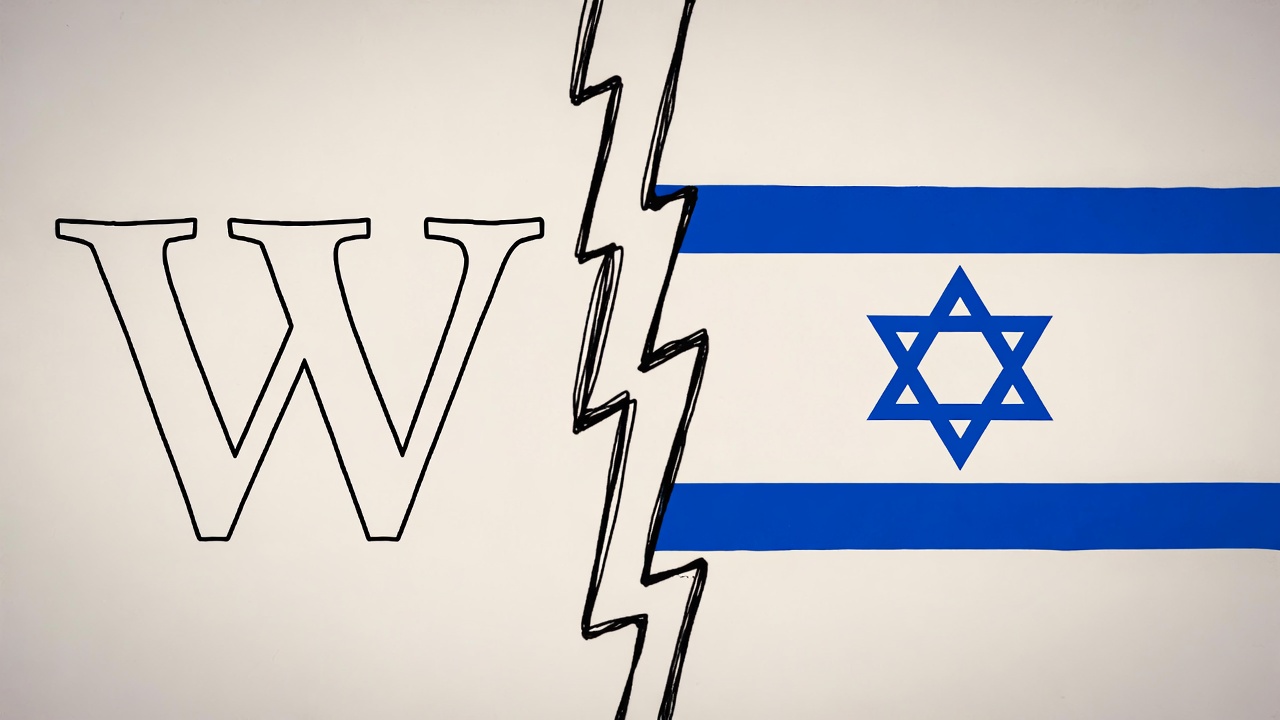
I looked again at Wikipedia’s Gaza genocide article and, as I said last year, I don’t believe it follows Wikipedia’s standards for NPOV. Here are some reasons for my position:
The first full statement in the article that admits that the Israelis do deny that it is a genocide, after all, and that they have any supporters at all is this: “Israel and its supporters maintain that its actions do not constitute genocide.” This does not occur until the last paragraph of the lede. In a neutral article about a hot war, even if one side is strongly favored according to Wikipedia’s selected reliable sources, the position of the disfavored side must be expressed in the opening paragraph. Surely it matters that the opening paragraph does not summarize the existence of any sustained opposition to the genocide characterization—opposition that the article itself later documents.
Unlike the Palestinian side, whose supporters are widely named, the supporters of the Israelis are rarely named. Take, for example, named scholars. Near as I can tell, the first is named a third of the way through the article—a West Point professor. Surely there are other scholars. Insofar as the opinion of scholars on this issue to be specially counted, perhaps we should see not only more names, but also their reasoning? This might even include Israeli scholars; even if some editors might regard them as institutionally interested, they nevertheless represent an identifiable scholarly and national perspective that is relevant to the dispute. Should not the views of Israel’s scholarly defenders be fully represented?
Moreover, we read much about, e.g., “genocide scholars” and “scholars specialized in Middle East studies,” but the article provides little contextual information about the composition or internal diversity of these scholarly communities as they relate to Israel. I am not casting aspersions on their views, which are valuable, or their psychology or moral probity, which we should accept as sound. I am simply saying that it matters, especially in the context of a hot war involving the least popular country in the Middle East, whether such scholars were antecedently anti-Israeli—which, I hardly need to point out, it is possible for scholars to be. Surely Wikipedia is allowed to provide readers with sufficient descriptive context to understand how representative these expert citations are. I make this point by way of asking for more descriptive completeness.
Then, farther down, we finally get the admission that “Several Western governments (notably the United States, United Kingdom, and Germany) reject calling Israel’s actions in Gaza a genocide.” Surely this deserves to be in the lede, not buried over 10,000 words into an article that is well over 30,000 words?
In the coverage of the ICJ case, the statements of the Israeli spokesman are quoted in the briefest way possible, while the sole dissenting judge, Julia Sebutinde, is quoted at the end of the section with a partial sentence. While proportional, what this quotation does not do is clearly or fairly represent her views, which a mere partial sentence can hardly do. But this is just another example.
More generally, for an article of well over 30,000 words, it is remarkable how often it is that the (scant) pro-Israeli statements are made without a detailed rationale. This is of limited value for a reader who is trying to weigh both sides in an attempt to make up his or her own mind. A genuinely neutral article, whatever else is true of it, would certainly have to contain, in the lede and probably in its own dedicated section(s), a detailed explanation of the rationale offered by the Israelis for (a) the great destructive power wielded against the Palestinians and (b) why they maintain that this is not, in fact, genocide. Similarly, there are relatively few rebuttals by Israelis (or their other defenders) to the accusations made against them—often, none at all. A reader might well ask, “Is this lack of response because no one can defend them at all, and has nothing to say?”
Finally, a clarifying question is what WP:UNDUE actually requires in this case. What is probative? Just the views of (one class of) academics? International orgs? How should editors evaluate due weight when some categories of sources overwhelmingly reflect one side of an ongoing dispute? Does it not matter that it is a hot war, and that there is, after all, a long, ugly tradition of antisemitism to contend with, and that some of the most important nations in the international community officially deny that Israel has engaged in a genocide? If public opinion data are included at all, it would seem relevant to present them in a way that reflects disagreement rather than implying unanimity. The article says that half of U.S. voters believe Israel is committing genocide in Gaza; what about the other half? On a military issue in which their taxpayer dollars help pay for one side, are their views worthless for purposes of determining “due weight”?
One might say much more, but I thought that, in a discourse that is so fraught with so much bare assertion on both sides, it would help to lay out why one might think that the article needs to be brought more in line with NPOV.
Reply to “A note on NPOV, ledes, and the erasure of dissent”