On W. L. Craig on whether God can learn

5 comments

A friend of mine has pressed me to respond to William Lane Craig’s defense of Molinism, so here is a small contribution. Recently, I found an occasion to do so. Craig’s X.com team posted this video, a snippet of a longer interview; click and watch it, it’s only 94 seconds. Craig is being provocative, and in fact, the title added to the snippet (“If God knows everything—can he still learn?”) is somewhat misleading about his views. Still, I am taking the bait, as this strikes me as a good jumping-off point for the debate about divine foreknowledge, free will, and future contingents. (I did take up this topic last May, but with almost no attention to Molinism.) Let’s review how the debate typically proceeds when Craig’s Molinism is deployed to reconcile divine foreknowledge with human freedom, concluding by evaluating Craig’s Molinist proposal. I am saving my response to Craig until the end.
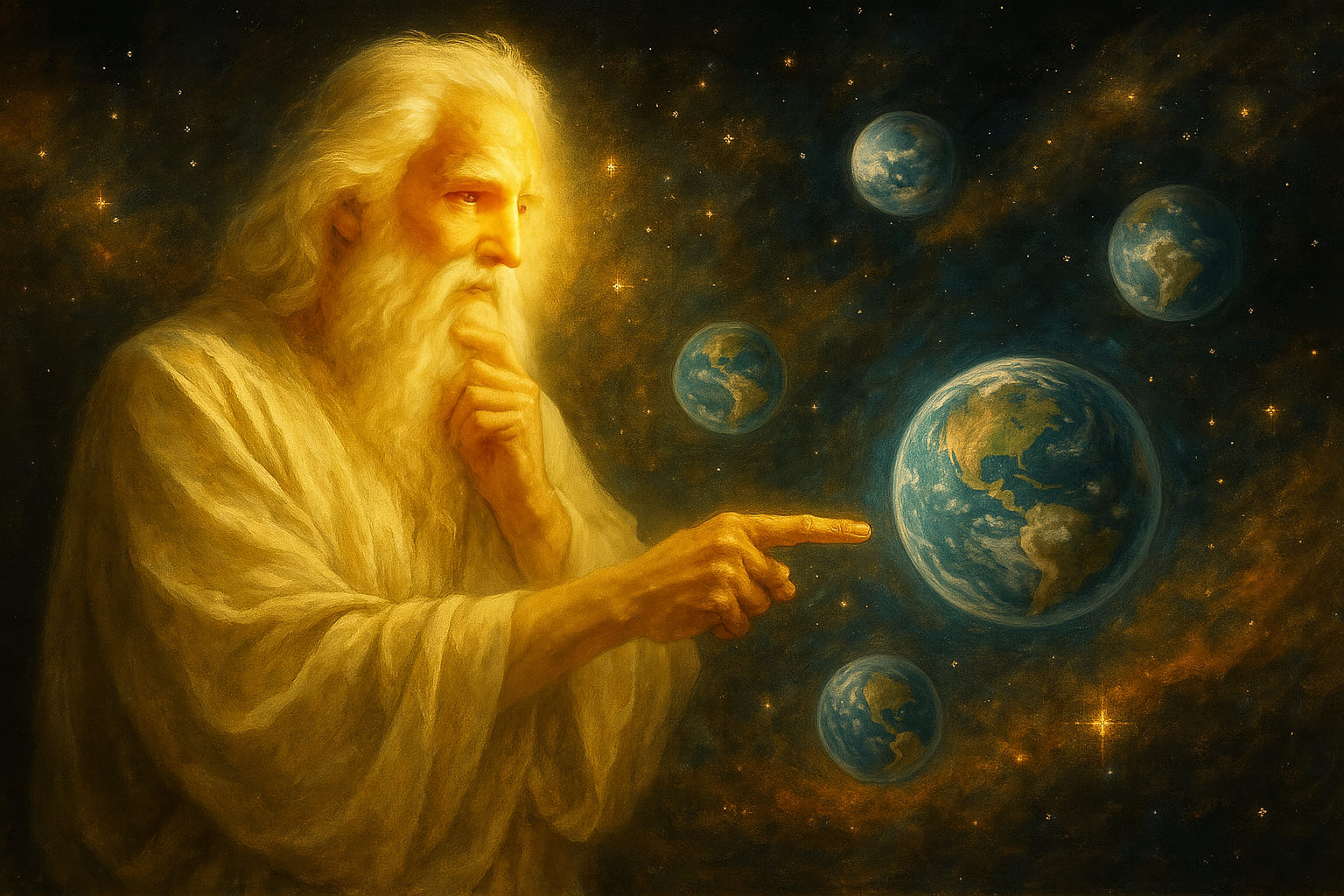
God timelessly chooses the best of all possible worlds.

by

Posted

in

, , ,

Comments

Please do dive in (politely). I want your reactions!

5 responses to “On W. L. Craig on whether God can learn”

  1. You do not distinguish between possible worlds (natural knowledge) and feasible worlds (middle knowledge). This is what distinguishes Molinism from Calvinism, and what makes Molinism non-deterministic. (By the way, I wrote you a comment on your article on determinism, I would appreciate your feedback if you have the time and inclination.) Fraternally.

  2. Origen and the early Church taught that God was outside of His creation, even outside of time. Therefore He is not limited by the laws He placed upon us in creation and time. Science -string theory – is suggesting creation at the core has perhaps 11 dimensions not the 4 we are able to understand. Things that appear impossible in 2 dimensions work in 3. Our questions about God – Trinity, how God can know the future without eliminating our free will and responsibility – might be easy in 11 dimensions.

    1. Fortunately, we do not have to have any opinions about string theory to make sense of this, though. God—whatever God is, precisely, in himself—is wholly independent of his creation. For that reason, if these dimensions (regardless of their number) are things that he created, then he exists independently of them.

      Craig apparently takes the view that God is “in time” “after” the creation takes place. But this is, as far as I can tell, conceptually incoherent. If time is only an aspect of (n-dimensional) spacetime, and not inherent to God’s own nature, then of course there was no “before” with respect to the act of creation. God’s act of creation was, rather, timeless.

      I think separate arguments can be made to the effect that the universality of natural law and other aspects of the universe entail that God must have a timeless existence; yet he also acts in time. Why must it be one or the other? The Bible itself shows three persons. One, the Word, acts within time, both to unfold the design of the universe and in his incarnation (including, I think, pre-incarnate visitations). Perhaps the Father is atemporal and the Son, with whom he is One (the divine essence is eternal and shared), is his emissary within time. To round out the trinitarian functions, we say the Spirit acts within us—not only within our souls, however, just as the Son does not only act in time.

    2. George Kirkman

      I wish we had up and down arrows. I’d give you an up arrow for your excellent comment. The only thing we would disagree on is the Trinity.

      In Deuteronomy 30:19 God admonishes us to chose life. Even though the all knowing God knows the chose we are going to make, we made that choice freely. If I gave a child a choice between a lemon and a candy bar, I know which one they would chose, but it would still be their choice.

Leave a Reply to DAVID Cancel reply

Your email address will not be published. Required fields are marked *