This was initially an X.com thread. In it, I respond to a July 16, 2026 New York Times article on the Wikimedia Foundation’s pick for a new CEO.
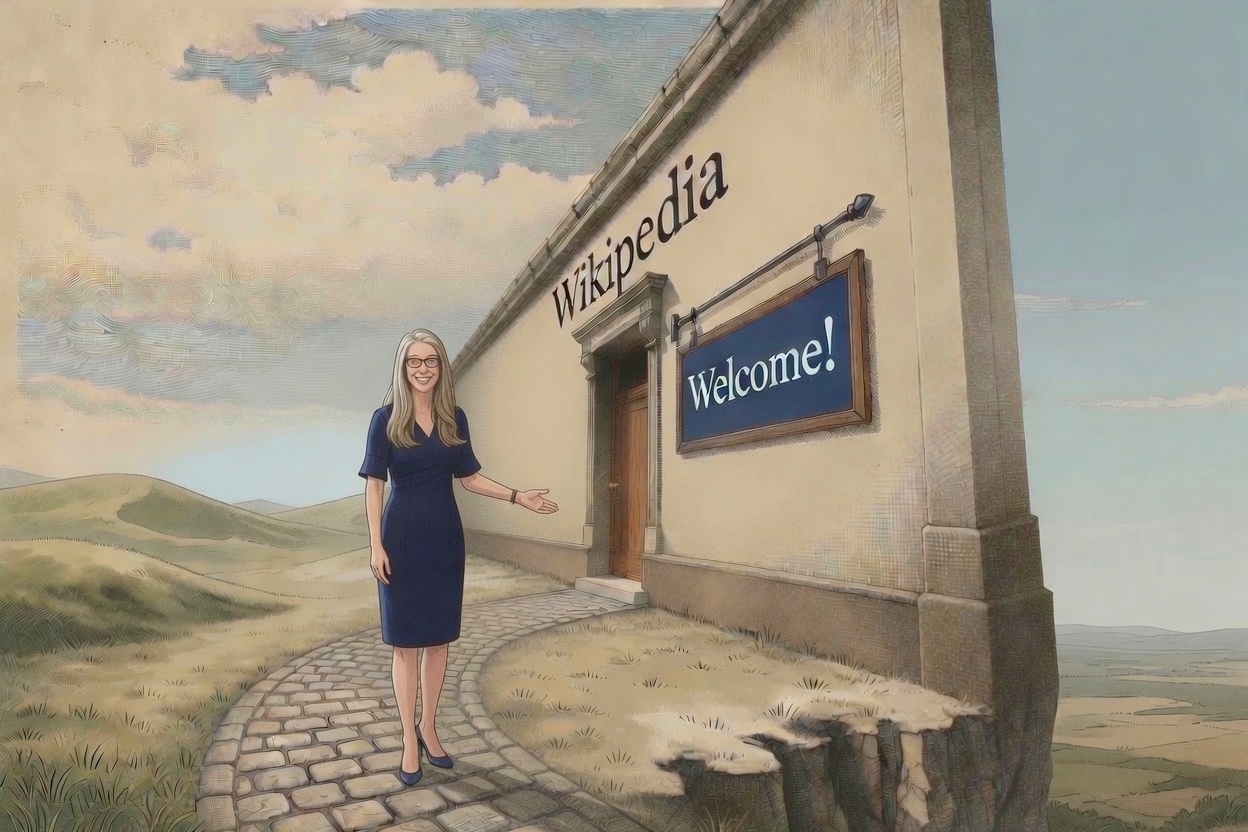
“The door is open” to “more dialogue” with conservatives, says new Wikimedia Foundation CEO Bernadette Meehan in remarks to the New York Times. In the article, there’s no mention of the obvious contrary evidence: When I proposed and recruited for WikiProject Intellectual Diversity, I was blocked. Yes, really.
The hypocrisy and dishonesty is disgusting. This political and intelligence operative—who formerly worked for the Obama Foundation and the National Security Council—is called a “diplomat.” She was a diplomat, true enough, but she is clearly also a partisan, as this her first interview shows.
The Times says Meehan is leading “a metaphorical battle for [Wikipedia’s] very existence.” Simple bullshit,1 of course. None of the things Wikipedia has recently faced threaten its existence. They might, however, force Wikipedia to reform. We can’t have that!
Next we read more bullshittery:
“Wikipedia underpins everything that we have on the internet,” she said in her first interview in the role. “It is beloved, it is credible; in increasingly polarized times, it is seen as a trustworthy source.”
Not exactly. The biggest threat to Wikipedia’s existence, the main reason that “Wikipedia is in peril” indeed, is that it is obviously biased, having become (over the last 20 years, and especially the last ten) the toadiest of propaganda organs of the Establishment. With each passing year, more and more people have come to realize this uncomfortable truth.
But, from the confines of a leftist Establishment bubble, Meehan might be foolish enough to believe what she says about Wikipedia’s reputation for trustworthiness. I doubt she does. Even if she doesn’t, she and the Times obviously want their readers to believe it. Wikipedia is viewed as an invaluable tool for controlling public opinion. That is its main value to such people.
Then we read this—this should be good—”To de-escalate the antagonism, Ms. Meehan and her team are addressing misconceptions about the site.”
*chortle*
“Wikipedia is largely decentralized,” don’t you know! It’s all open and independent: “independent contributors distilling facts through open debate and agreement.” So many independent “contributors,” when working together, can surely be trusted!
Above all, you must not believe that the site is being guided by editors who hide behind their anonymity but are working for governments and corporations, and for especially PR firms and as independent…no, not contributors, but rather contractors. No, no, Meehan and the Times say. “There is no shadowy mastermind, no leftist cabal, according to the foundation.”
Oh my. And today I learned that the founder of another Establishment propaganda organ, PolitiFact, is writing a book about Wikipedia:
“The most important thing to understand about Wikipedia is it is truly a democracy,” said Bill Adair, who created the fact-checking site PolitiFact and is writing a book about the encyclopedia. “It’s messy, it’s loud, it often works.”
Adair apparently hasn’t seen the more honest (and official) Wikipedia policy that “Wikipedia is not a democracy”: Wikipedia:What Wikipedia is not.
If you want a really honest account of how Wikipedia works, look at my most recent piece for the Washington Examiner: “Wikipedia’s co-founder, banned by an anonymous mob.”
As I wrote there:
“Here, then, is the ugly picture that emerges. Wikipedia is decidedly not a lovely, idealistic project staffed by students, scholars, and retirees who just want to share their knowledge to benefit the world. To be sure, there are people involved for whom this is true. But the site has manifestly been captured by a small clique of ideologically motivated bullies. They manipulate and intimidate the other participants, and anyone who does not fall in line — like me — is banned. They wield a lot of power in a petty and vicious way. Money clearly does change hands; in some cases, it resembles a shakedown.”
As if to respond to me, Meehan declared: “We are not seeking to be part of culture wars, of political discourse. These are people who want to put knowledge into the world, for people to do with it what they want.”
Yet Wikipedia forbids the use of the sources of one whole side of the Culture War, and anyone who pushes back on such articles must walk on eggshells or be permanently blocked against all reason and justice. So, when Meehan says Wikipedia doesn’t want to “be part of culture wars, of political discourse,” what she really means is that the “encyclopedia anybody can edit” has declared the winner of the Culture War (GASP) and locks down political discourse.
“A core component of what we do is preserving freedom to information,” Ms. Meehan said. “That will never change…”
Really, now? Preserving “freedom to information”? When so much information has been stripped out of Wikipedia over the last ten years, on grounds that it is “misinformation”? Listen, no public institution has been more hostile to our freedom to know, to become acquainted with the full breadth of opinion, than Wikipedia itself.
The hypocrisy, it burns.
The piece ends by piling on the sanctimonious nonsense:
Seeing the depravity of war and the worst of humanity fundamentally changed her, she said, compelling her to “run toward the light” and seek out “the antithesis of the bad.” That’s Wikipedia, she said — an experiment that will keep fighting to push society toward conciliation over conflict.
“In the world right now, where politicization is on the rise, where there’s disagreement on facts, where people can’t even engage civilly in a conversation, it’s OK to disagree,” she said. “But let’s come together and have a conversation based on fact and see where that takes us.”
If this were sincere, it would be ridiculously naïve; but naïve people do not work for the National Security Council. Rather, it is PR-driven sanctimonious preening of the sort that particularly appeals to the readership of the Times.
The whole neutral-arbiter act is pure kayfabe.
I will say this. If she actually meant that she wanted an intellectually diverse public to “come together and have a conversation based on fact,” as she risibly declares, she would be opposing most Wikipedians. They do not welcome such conversation, as my recent ban demonstrates, and as many of them say.
But the audience of this diplomatic humbug is not Wikipedians—or me—but the carefully managed readership of the Times, who will be delighted to have their comfortable ideas about Wikipedia stroked, even if they are absolutely false.
Footnotes
- A technical term. See Harry Frankfurt, On Bullshit.[↩]
Reply to “Wikipedia's new CEO says "the door is open," but they banned me for walking through it”